
The Woman Beyond the Menopause Threshold
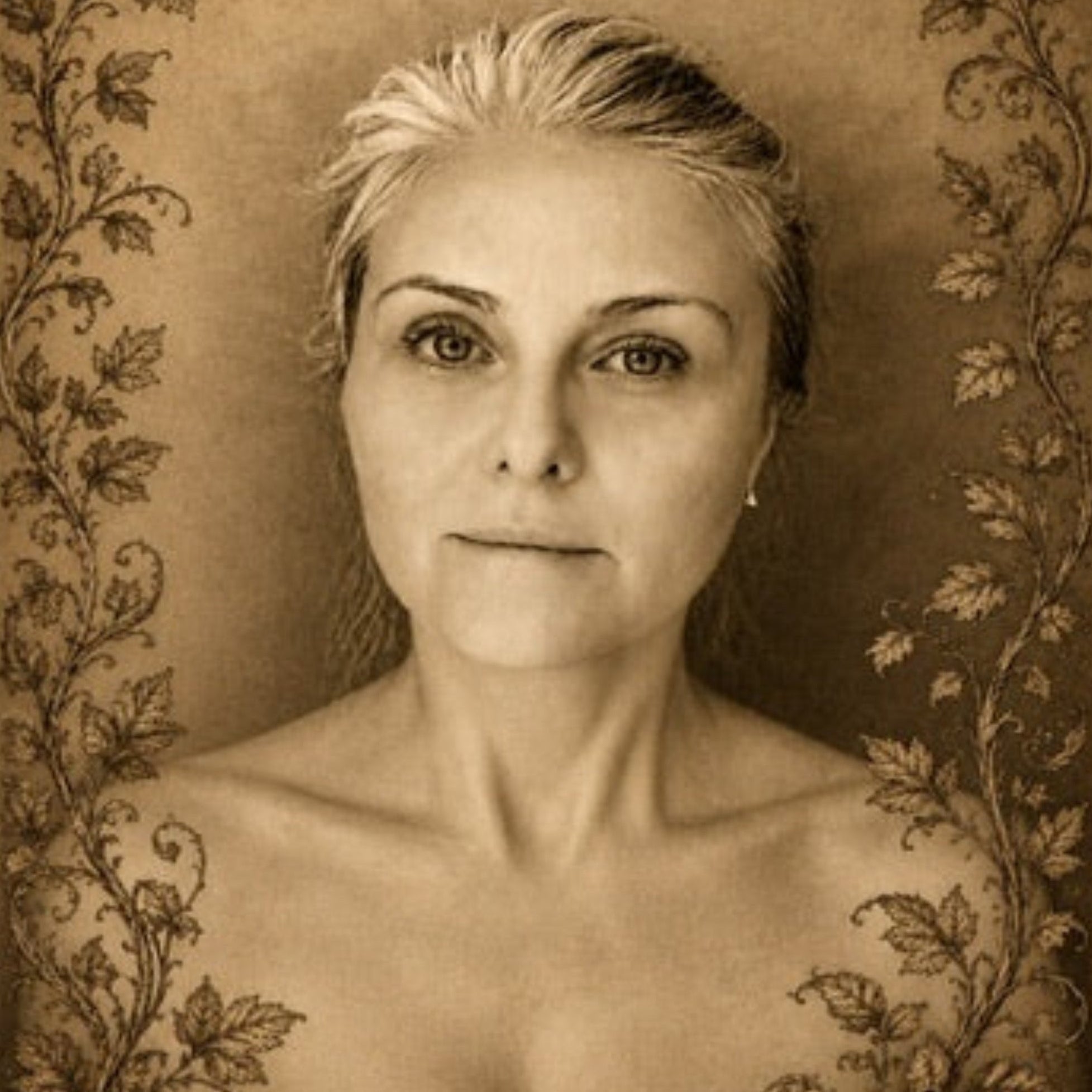
There is a strange conversation happening around menopause. We talk about the hot flushes. The disrupted sleep. The weight that suddenly seems to settle differently. The skin that changes. The hair that changes. The hormones that appear to have packed their bags and left without giving us a forwarding address. But we don't talk nearly enough about the woman who is changing underneath all of it. Because menopause isn't simply the ending of menstruation. For many women, it coincides with a profound psychological threshold — a period when the identity we have spent decades constructing no longer fits quite as comfortably as it once did.
And sometimes, rather than stepping through that doorway, we fight it, we self-sabotage, we cling, we compare, we desperately try to resurrect an earlier version of ourselves. And perhaps one of the most difficult truths to accept is also one of the most liberating:
You are never going to be the woman you were in your 20s, 30s or even your 40s again.
And why on earth should you be? You have lived, you have loved, lost, learned, created, survived, succeeded, failed, changed your mind, broken your heart, rebuilt yourself and accumulated decades of experience. The invitation of menopause isn't necessarily to get the old you back. Perhaps it is to finally meet the woman you have become.
There can be genuine grief in menopause. Our culture has spent decades associating female value with youth, fertility, beauty and desirability. Women are subtly — and sometimes not so subtly — taught that ageing means becoming less visible, less relevant and less valuable. So when the face begins to change, the body softens, fertility ends and the familiar hormonal rhythm starts disappearing, something deeper can be triggered: Who am I now? And this is where self-sabotage can creep in.
We might become hypercritical of our appearance. Compare ourselves relentlessly with younger women or old photographs. Withdraw socially. Abandon things that once made us feel alive. Convince ourselves that certain clothes, adventures, relationships, businesses, careers or dreams are no longer for women our age. Or we may become obsessed with trying to recreate the woman we used to be. There is nothing wrong with wanting to feel beautiful, strong, sensual and healthy. I certainly don't believe women should simply surrender themselves to ageing. But there is a difference between caring for the woman you are becoming and constantly punishing her for not being the woman you used to be. That distinction is enormous.
Sometimes self-sabotage isn't laziness or lack of discipline. It is resistance to transformation. Because transformation requires us to relinquish an identity before we fully understand what is going to replace it. That can feel terrifying. The old version of you is familiar. You know how she operates. You know what makes her attractive, useful, successful, needed or safe. The emerging woman may want something completely different. She may have less tolerance for relationships that drain her. She may no longer want to people-please. She may suddenly question the career, marriage, friendships, responsibilities or expectations she has carried for years. She may need more solitude. She may become fiercely protective of her time. She may rediscover sexuality in an entirely different way — less about being desirable and more about inhabiting her own body. And she may begin asking a question that perhaps she hasn't allowed herself to ask for decades: What do I actually want?
That woman can feel disruptive. But perhaps she isn't falling apart at all. Perhaps she is reorganising. This transition has a beautiful parallel in the modern Pagan and Goddess-spirituality archetype of Maiden, Mother and Crone.
The three figures represent phases of feminine experience — although historically, traditions surrounding triple goddesses are far more varied than the neat Maiden-Mother-Crone formula we commonly use today. The specific three-stage model became particularly influential through modern folklore, Paganism and Goddess spirituality, with writers such as Robert Graves helping popularise the idea of a triple goddess associated with stages of womanhood. Yet the archetype resonates because it gives language to something women instinctively understand: we are not meant to remain in one season forever.
The Maiden represents beginnings. She is curiosity, possibility, exploration, sexuality awakening, experimentation and the discovery of self. She asks: Who could I become? There is beauty in the Maiden — but she is not the pinnacle of womanhood. She is the beginning of it.
The Mother represents creation, nourishment and responsibility. And motherhood here doesn't have to mean physically having children. We mother businesses. We mother ideas. We mother communities, relationships, animals, projects and sometimes entire bloody families who appear incapable of finding anything without us. The Mother asks: What can I create, nurture and sustain? But there is a shadow within this archetype too. A woman can spend so many years being needed that she eventually forgets who she is when nobody needs anything from her. Then menopause arrives. Children may be growing. Relationships change. Parents age. Careers shift. The body changes. And suddenly the identity of the Mother begins loosening its grip. This is where the threshold of the Crone appears.
The Crone. Even the word crone makes some women recoil. We picture the bent old hag from the fairy tale — grey hair, warts, crooked nose, muttering over a cauldron. But look more deeply at the archetype and something completely different appears. The Crone is the wise woman. She has crossed enough rivers to recognise the current. She has experienced enough human behaviour to recognise patterns. She doesn't require everybody to like her. She knows where her boundaries are. She understands that "no" is a complete sentence. She possesses the wisdom that can only come from experience. And perhaps most importantly, she has begun to retrieve the energy she spent decades giving away. The Crone isn't the death of femininity. She is femininity without apology. She can still be beautiful. She can be sensual. She can fall wildly in love. She can start businesses, travel, have extraordinary sex, learn new things, wear outrageous clothes, change careers, dance until midnight or decide she'd rather be home by nine with a cup of tea. The difference is that increasingly, she chooses. That is her power.
Imagine how differently women might experience menopause if we stopped presenting it solely as a catalogue of symptoms and began acknowledging it as a psychological and emotional initiation too. Of course, the physical realities matter. Hormonal changes can affect sleep, mood, cognition, sexual function and wellbeing, and women deserve appropriate medical support when they need it. But alongside the biology, there can be another conversation... What is this stage asking you to release?
Perhaps menopause exposes all the places where we have abandoned ourselves. The relationships we tolerate. The resentment we swallow. The dreams we continually postpone. The boundaries we fail to establish. The exhaustion we pretend isn't there.The constant need for approval. The belief that our value comes from how useful, attractive or accommodating we are to everybody else. No wonder this transition can feel turbulent.
Sometimes the woman emerging simply isn't prepared to continue living according to the rules the younger woman accepted. I hear women say: "I just want to feel like myself again."
But which self? The 25-year-old you hadn't learned what you know now. The 35-year-old you may have been juggling responsibilities and desperately trying to hold everything together. The 45-year-old you may have already felt the first whispers that something was changing. We romanticise previous versions of ourselves because memory conveniently edits out quite a lot of the struggle. Instead of asking: How do I become her again? Try asking: Who am I becoming now? That question has possibility in it.
A woman's life should not be imagined as an ascent towards youth followed by a slow decline into irrelevance. It is a series of transformations. The Maiden gathers experiences. The Mother creates and nurtures. And the Crone distils everything she has experienced into wisdom. She has stories. She has scars. She has discernment. She knows that beauty isn't something that expires when collagen declines. There is something extraordinarily beautiful about a woman who has finally inhabited herself. Not desperately performing youth. Not apologising for ageing. Not disappearing. But becoming more distinctly herself.
So perhaps menopause isn't asking you to become smaller. Perhaps it is asking you to stop carrying identities that have become too small for you. There will be things worth grieving. There will be physical changes that require compassion, support and sometimes treatment. There may be days when you don't recognise the woman looking back from the mirror. But don't automatically assume that means you've lost yourself.
Look again.....Because underneath the changing hormones, changing body and changing priorities may be a woman you haven't met before. The Maiden wanted to discover the world. The Mother wanted to nurture it. The Crone finally understands it. And she is not a withered old hag waiting quietly at the edge of society. She is the wise woman at the fire. The keeper of experience. The boundary setter. The truth teller. The woman who knows when to hold on and, perhaps more importantly, when to let go.
Menopause doesn't have to be a journey backwards in search of the woman you were.
It can be the doorway into the woman you have spent your whole life becoming.
Hinterlasse einen Kommentar
Alle Kommentare werden vor der Veröffentlichung geprüft.
Diese Website ist durch hCaptcha geschützt und es gelten die allgemeinen Geschäftsbedingungen und Datenschutzbestimmungen von hCaptcha.